From Security to Usability
Validate user mental models on Two-Factors Wallet and its branding direction

Releasing a new product comes with risks and companies would want to lower that through market research to validate their assumptions. I was then asked by the team to validate the branding and user flows of the upcoming product Two-Factor Wallet prior to its early release.
Most of the users were able to relate to the proposed branding to 2-steps authentications which they are already familiar with. The user flows were different from some users’ mental models and I identified the low effort but high impact improvements to close the gaps. The product was launched with these area of improvements suggested. It has also been expanded to customisable configuration of authentications, where currently it is serving nearly 50 millions of end users.
Crafting the Approach
I come to understand that we need a Usability Testing that could quickly capture users' true thoughts and feelings throughout the different points of user flows. This is best done through interviews with scenario-based user flows, where they feel immersive through personal experiences, that are broken down into short segments to prevent them being mentally overloaded.
During the testing, I asked questions which could reflect users' way of thinking. Followed up by exposing them to the product-based user flows with similar questions. This allows us to do a direct comparison with users’ mental models.
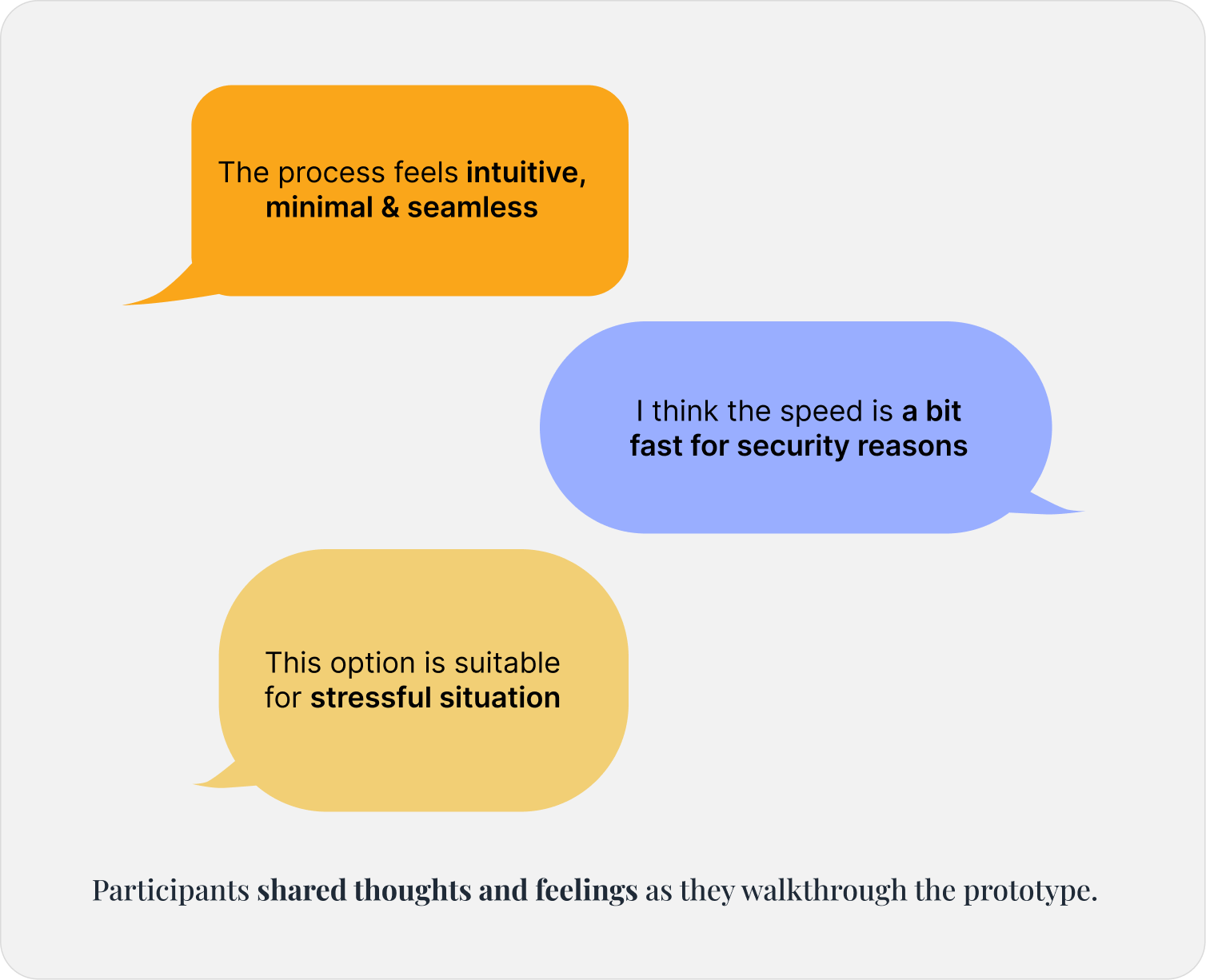
The sessions were organised online via Google Meet with duration of 50 mins each among 8 participants over one week. To determine the right group of participants, I set requirements for recruitment based on the intended group of target audience - a mix of crypto wallet users and non-crypto wallet users with technical literacy up to stage of 2FA. Therefore it is ensured that we cover the product’s set target audiences through these pre-requisites.
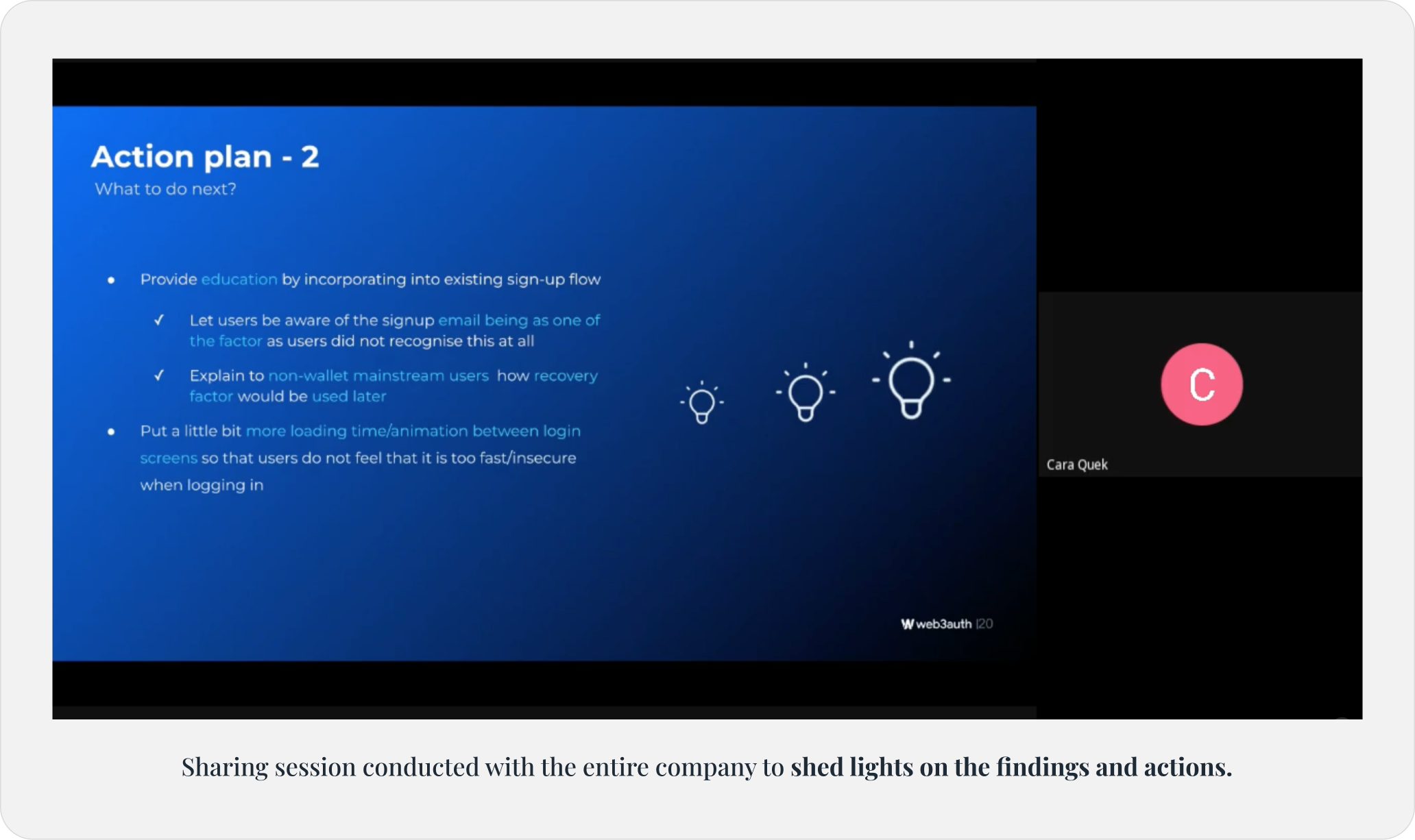
The results from the Usability Testing were compiled and synthesised in Dovetail. Recordings were easily transcribed with high accuracy and findings were gathered through themed data via Affinity Mapping. I also shared the findings and actions that we could take through a sharing session remotely.
Collaborating Internally on Initial Testings
Prototype was done up and tested internally within design team and other cross-functional teams for the Usability Testing prior to the actual day to ensure it works smoothly. I also collaborated closely throughout with the company Founder, Business and Marketing to ensure the branding segment would be well integrated into the followup questions as part of the testing.
🖤 Manage Participants' Emotions
I had to manage the participants’ emotions by starting with some casual questions that revolved around themselves. This helped to calm them down and get them ready for more in-depth testings. It is critical as any interviews could make one nervous and that can get in the way of having a research participant to behave like themselves, rather than who they think we want them to be.
😮💨 Recruitment was Tedious
When I joined the team, there was no inventory of research participants. Mainly, recruitment or research was done directly at events. I had to recruit from scratch through community channels. It then prompted me to start a research participant inventory list by following up with newly recruited participants to see if they are willing to be on our list to join future researches. This ensures we don't breach any Personal Data Protection Act (PDPA) laws. Despite the process being tedious, it equipped me with the experience in establishing a pool of research participants.